India imports gold every year while an enormous quantity of it sits unused in household lockers and temple vaults. That gap is the whole business case for a gold activation platform, and it is the problem BKS MyGold was built to address.
We built the website and the iOS and Android apps. This is what the work involved, what made it harder than a normal fintech build, and what transfers to anyone planning a gold investment or digital asset platform.
What MyGold Actually Does
Most people hear “digital gold app” and picture a buy button with a live price. MyGold is wider than that, and the width is the difficulty.
The platform covers buying and selling MMTC-PAMP 24K digital gold, leasing gold to earn additional gold weight rather than cash interest, SIPs starting from small daily amounts, gifting, and temple daan. The marketing site carries the infrastructure story: lease without transferring ownership, sell old gold for liquidity, and separate pathways for businesses and temples.
You can see the public product at bksmygold.com and the app is live on both stores.
The Hard Part Was Never the Payments
Payments are a solved problem. Any competent team can wire up a gateway.
The difficulty here was that trust is the product. Someone is handing over physical gold, or converting savings into a claim on metal they cannot see. Insurance, legal documentation, purity testing and live pricing all had to stay visible without turning every screen into a disclaimer.
Three things made it genuinely harder than a standard fintech app:
Leasing is not an intuitive concept. The user keeps ownership and earns more gold weight. Explain that badly and it sounds like you are taking their gold. Explain it too cautiously and nobody starts.
Two audiences, one brand. A first-time retail saver putting in a small SIP, and a temple trust or business onboarding a large holding. Different stakes, different questions, same product.
The website and the app had to feel like one thing. Visitors read the infrastructure story on the site, then open an app that has to deliver the same promise in plain actions.
The Decisions That Shaped the Build
We led with the paradox, not the features
The site opens on the problem: idle gold sitting in lockers while the country imports more. A features-first homepage would have been easier to build and would have converted worse, because the reader needs a reason to care before a reason to choose.
We mirrored the website journeys inside the app
Lease, sell, business, temple and franchise are pathways on the site. The same journeys appear as plain-language actions in the app. Nobody has to learn two products.
We put the legal apparatus in the flow, not in a footer
Insurance, stamp-paper agreements and the ownership-never-transfers point appear where the user is deciding, not buried in terms. For a trust product that is a conversion feature, not a compliance cost.
We kept the first action small
SIPs from a very small daily amount exist because the hardest step is the first one. Lowering the entry cost of trying something is worth more than another feature.
What This Costs to Build
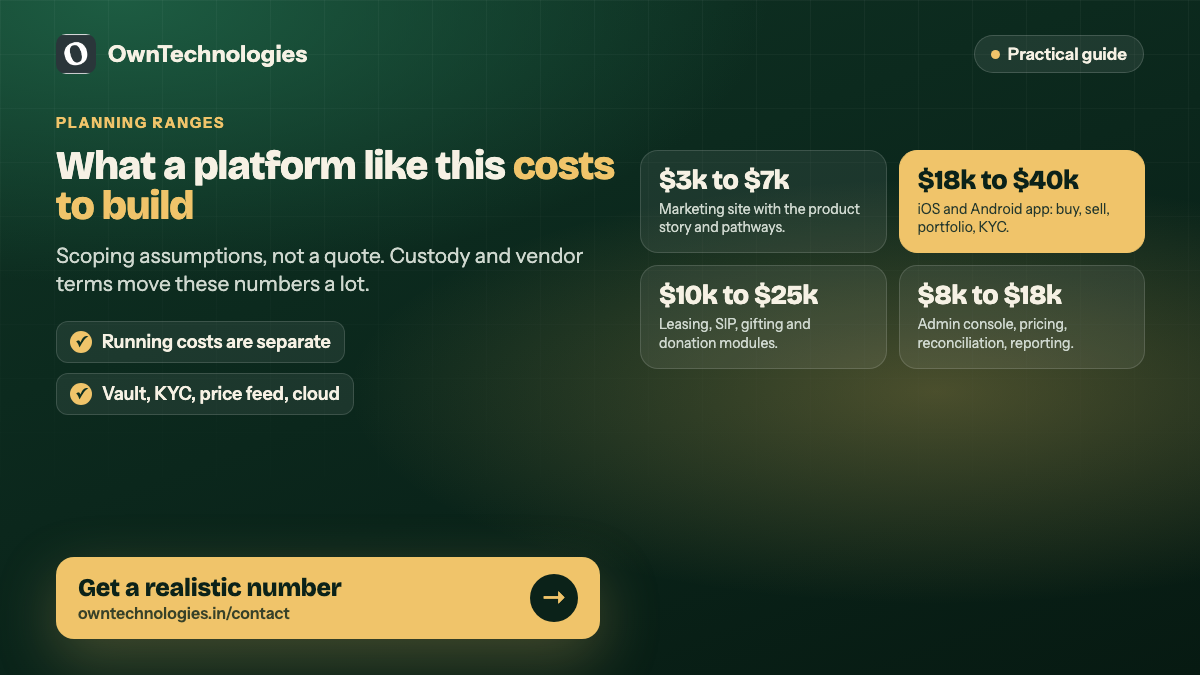
Planning ranges for a comparable platform, not a quote for MyGold.
| Component | Build cost (USD) | Build cost (INR) |
|---|---|---|
| Marketing site with the product story and pathways | $3,000 to $7,000 | 2.5 to 6 lakh |
| iOS and Android app, buy, sell, portfolio, KYC | $18,000 to $40,000 | 15 to 33 lakh |
| Leasing, SIP, gifting and donation modules | $10,000 to $25,000 | 8 to 21 lakh |
| Admin console, pricing, reconciliation, reporting | $8,000 to $18,000 | 6.5 to 15 lakh |
| Vendor, custodian and payment integrations | $5,000 to $12,000 | 4 to 10 lakh |
Running costs are separate and persistent: custodian and vault fees, KYC verification per user, payment gateway percentages, live price feeds and cloud. A platform like this is not a one-off spend, which is the thing most founders underestimate.
What We Would Tell Anyone Building In This Space
Pick your bullion partner before you design anything. Whether you work with MMTC-PAMP or another refiner changes your purity story, your pricing feed and your settlement flow. Retrofitting a different partner later is close to a rebuild.
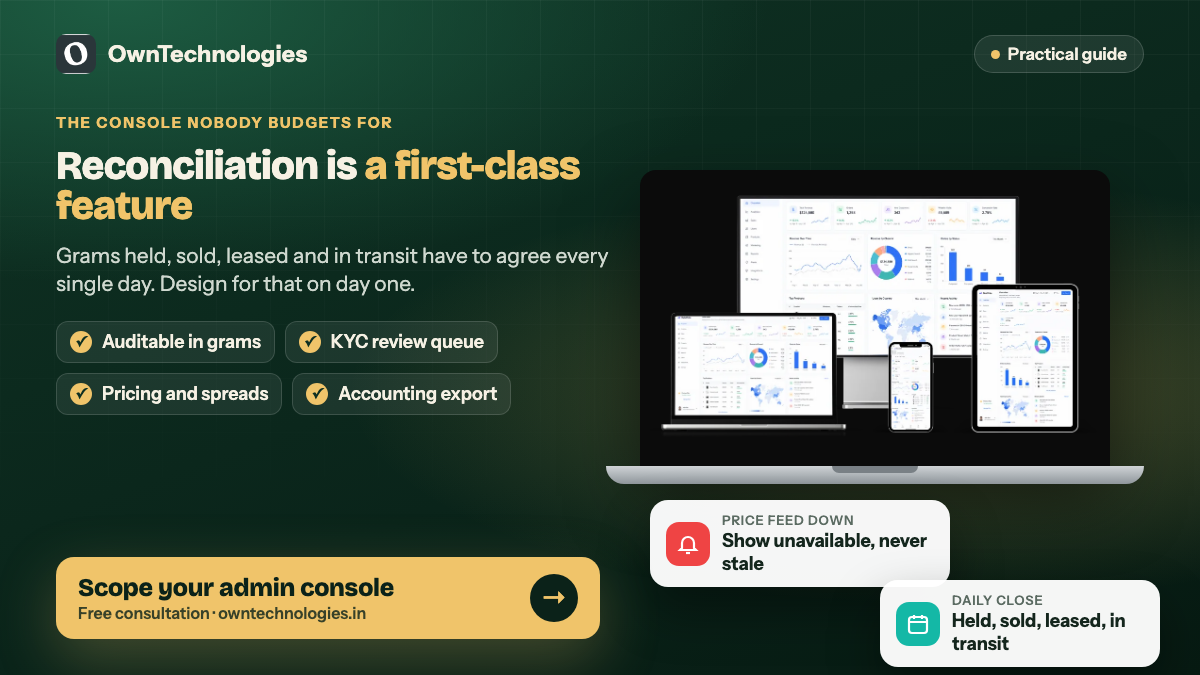
Reconciliation is a first-class feature. Grams held, grams sold, grams leased and grams in transit must agree at the end of every day. Design the admin console for that from the start. Bolting it on after launch is how small discrepancies become a crisis.
Price feed failure is your worst outage. Decide early what the app shows when the feed drops. A stale price is worse than a visible “pricing unavailable” state, because someone will transact on it.
Regulation moves. Digital gold and gold-linked products in India have had an evolving relationship with the regulators, and anything you read today may be out of date. Take current legal advice rather than copying a competitor’s structure, and keep RBI and SEBI notifications in your review cycle.
Build the institutional path separately. Temples and businesses do not self-serve through a retail signup. They need documentation, a named contact and an onboarding flow that assumes a conversation.
Where the Engineering Effort Actually Went
Less in the places you would expect.
- Live pricing with sane fallbacks, and making the refresh visible so the number feels trustworthy
- KYC that does not lose people halfway, because drop-off at verification is where fintech apps bleed
- A ledger that is auditable in grams, not just in currency
- Content and copy iteration on the leasing explanation, which took more passes than any screen
- Making the same information legible to a first-time saver and to a trust’s accountant
Comparable Work
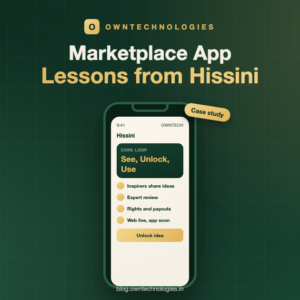
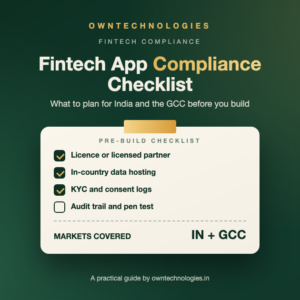
The platform side of this is close to other builds of ours. Our marketplace work on Hissini deals with the same two-sided onboarding problem, and our fintech app development guide covers the compliance and KYC groundwork in more depth. The full case study sits on our portfolio.
If you are scoping something similar, the relevant services are mobile app development for the product itself and admin panel and CRM work for the console behind it, which in this category is not optional.
Mistakes We See In This Category
- Launching retail and institutional at the same time and serving neither well
- Treating the admin console as an afterthought, then reconciling in spreadsheets
- Hiding the legal and insurance detail, which reduces conversion rather than improving it
- Copying a competitor’s regulatory structure without taking advice
- Building a beautiful app on top of a vendor relationship that was never negotiated properly
- No plan for what the screen shows when the price feed fails
Frequently Asked Questions
For a first version covering buy, sell, portfolio and KYC, plan on four to six months with a small focused team. Leasing, SIPs, gifting and institutional onboarding add meaningfully to that, which is why they are usually a second phase rather than a launch requirement.
As a planning range, $18,000 to $40,000 for the core iOS and Android app, plus $8,000 to $18,000 for the admin console. Leasing and donation modules add $10,000 to $25,000. Treat these as scoping assumptions, not a quote, since the vendor and custody arrangements move the number a lot.
The trust. The payments, the price feed and the ledger are well understood engineering. Explaining leasing so a first-time user starts, without overstating anything, took more iterations than any technical component on this project.
Almost never at the start. Most platforms work with an established refiner and custodian, which is why choosing that partner early matters so much. It determines your purity claims, your pricing and your settlement.
Reconcile holdings in grams, show every transaction against a user, manage pricing and spreads, handle KYC review queues, and export for accounting. If it cannot answer “how much gold do we hold and who does it belong to” instantly, it is not finished.
Yes. The pattern of a physical asset, a custodian, a live price and a trust problem applies to silver, commodities and other asset-backed products. The product thinking transfers more than the code does.
Final Thoughts
The interesting part of MyGold was never the gold price API. It was turning an unfamiliar financial arrangement into something a cautious saver would try with a small amount, and an institution would commit to properly, inside one brand.
If you are building in this space, spend your early effort on the partner, the ledger and the explanation. The app is the easy part.
If you want a scoping conversation on a platform like this, tell us what you are planning and we will give you a realistic shape and number rather than an encouraging one.