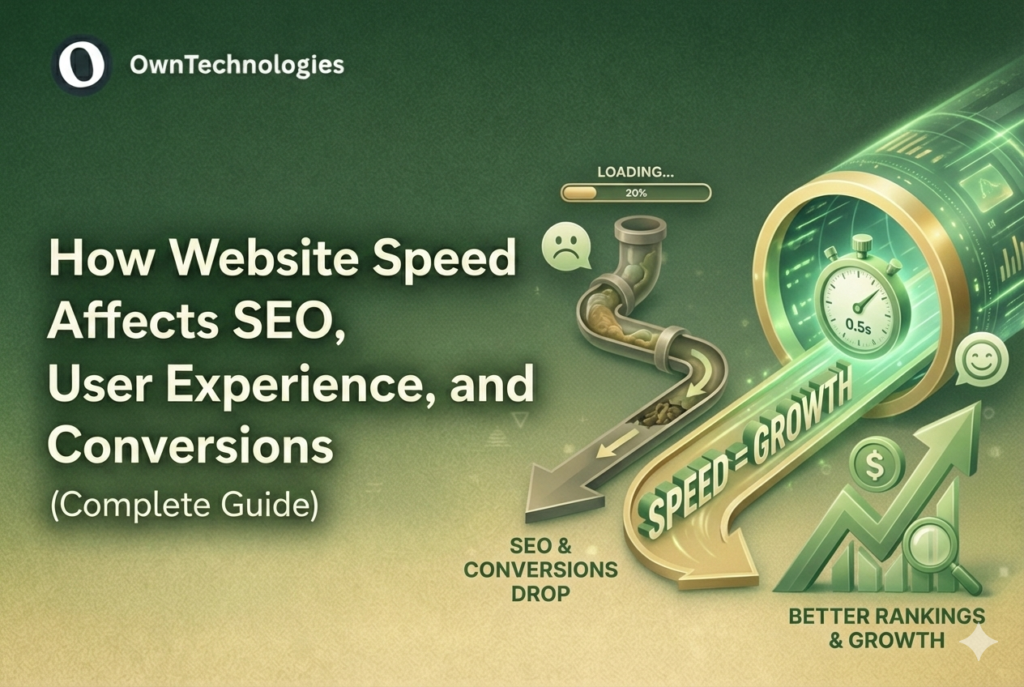
Website speed is no longer just a technical metric — it is a direct growth factor.
A slow website doesn’t just frustrate users. It reduces search rankings, increases bounce rates, and silently kills conversions. In today’s competitive digital landscape, speed impacts visibility, trust, engagement, and revenue.
This guide explains how website speed affects SEO, user experience (UX), and conversions — and what businesses should do about it.
Why Website Speed Matters More Than Ever
Users expect websites to load almost instantly. If a page takes too long:
- Users leave
- Trust drops
- Conversions decrease
- Search rankings suffer
Speed influences both how users behave and how search engines evaluate your website.
How Website Speed Affects SEO
1. Website Speed Is a Google Ranking Factor
Google uses page speed as a ranking signal, especially through Core Web Vitals. Faster websites are more likely to rank higher than slower competitors.
2. Faster Websites Improve Crawl Efficiency
Search engines crawl websites with limited resources. Slow-loading pages can reduce crawl efficiency, affecting indexing and visibility.
3. Speed Impacts Core Web Vitals
Metrics like Largest Contentful Paint (LCP), Interaction to Next Paint (INP), and Cumulative Layout Shift (CLS) are performance indicators that directly influence rankings.
4. Lower Bounce Rate Improves SEO Signals
When users leave quickly due to slow loading, it increases bounce rates. High bounce rates can negatively affect overall performance signals.
How Website Speed Impacts User Experience (UX)
1. Faster Load Times Build Instant Trust
Users associate speed with professionalism and reliability. A fast website feels credible and modern.
2. Reduced Friction Improves Engagement
Slow pages create friction. Fast-loading websites allow users to navigate smoothly, increasing time on site and interaction levels.
3. Mobile Experience Depends on Speed
Mobile users often rely on variable networks. Optimized speed ensures consistent performance across devices.
How Website Speed Affects Conversions
1. Even a One-Second Delay Reduces Conversions
Studies show that small delays significantly decrease conversion rates. Faster websites consistently outperform slower ones in lead generation and sales.
2. Speed Influences Decision-Making
Users are less likely to complete forms, make purchases, or book consultations if the website feels slow or unresponsive.
3. Faster Checkout and Forms Increase Lead Quality
Optimized performance ensures smoother checkout processes and form submissions, reducing drop-offs.
Common Causes of Slow Website Speed
- Heavy, uncompressed images
- Excessive plugins or scripts
- Poor hosting infrastructure
- Unoptimized code
- Lack of caching
Identifying these issues is the first step toward improvement.
How to Improve Website Speed
Optimize Images & Media
Compress images and use modern formats to reduce load time.
Enable Caching
Caching stores temporary data to reduce repeated loading time.
Minimize Code & Scripts
Reduce unnecessary CSS, JavaScript, and third-party tools.
Choose Reliable Hosting
Server performance plays a critical role in website speed.
Monitor Core Web Vitals
Regular performance audits help maintain optimal speed.
Is Your Website Speed Hurting Your Growth?
Many businesses invest in traffic but lose leads because their website loads slowly.
👉 Talk to Our Digital Experts – 91-9910765616
We help businesses audit, optimize, and improve website performance to enhance SEO, user experience, and conversions.
📩 hello@owntechnologies.in
🌐 owntechnologies.in
Final Thoughts
Website speed affects SEO rankings, user trust, and conversion rates simultaneously. It is one of the few factors that impacts visibility, engagement, and revenue at the same time.
Optimizing speed isn’t just a technical upgrade — it’s a growth strategy.
Frequently Asked Questions
1. Does website speed affect SEO rankings?
Yes, website speed is a confirmed Google ranking factor. Faster websites perform better in Core Web Vitals and provide better user experience signals, which improve search rankings.
2. How does website speed impact conversion rates?
Slow websites increase bounce rates and reduce user trust, leading to lower form submissions, sales, and inquiries. Faster websites improve engagement and conversions.
3. What is considered a good website load time?
A good website load time is under 3 seconds. Ideally, key content should appear within 2 seconds for optimal performance and user retention.
4. How does website speed affect mobile users?
Mobile users often browse on slower networks. Optimized speed ensures smooth performance, better usability, and higher engagement on mobile devices.
5. What tools can measure website speed?
Common tools include Google PageSpeed Insights, GTmetrix, Lighthouse, and Core Web Vitals reports in Google Search Console.
6. Can slow website speed increase bounce rate?
Yes, users are more likely to leave if a website loads slowly. Higher bounce rates negatively impact engagement and SEO performance.
7. How often should businesses test website speed?
Businesses should test website speed monthly and after major updates, redesigns, or plugin additions.