In today’s digital-first world, your website is often the first interaction users have with your business.
If your website looks outdated, loads slowly, or feels confusing, users won’t trust it—and they definitely won’t convert.
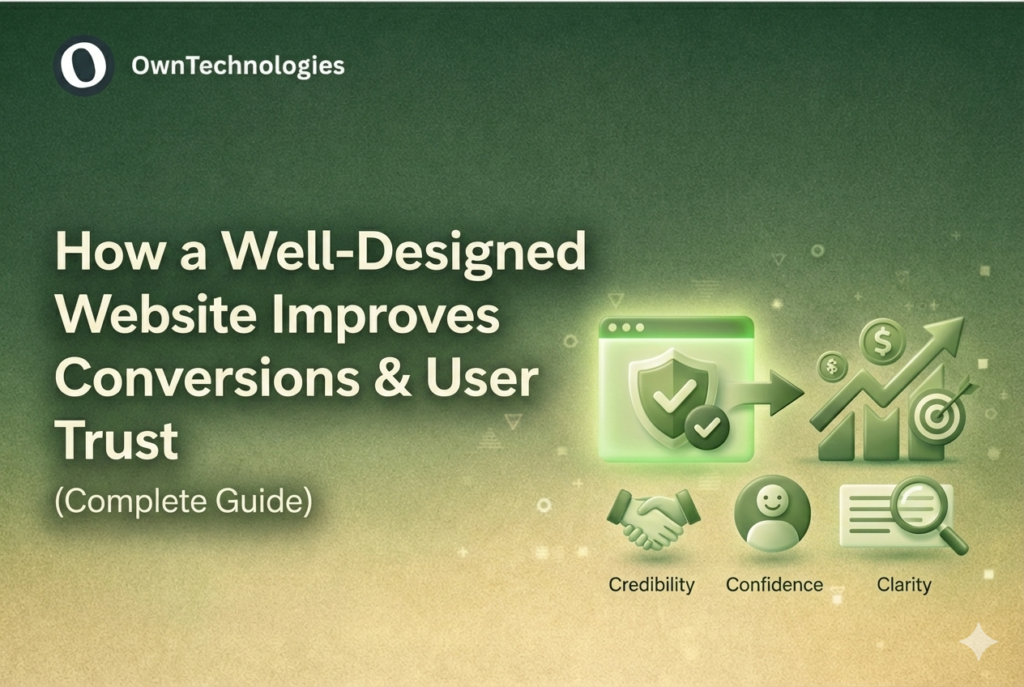
A well-designed website does more than look good. It builds credibility, confidence, and clarity, which directly improves conversion rates and user trust. This guide explains how design impacts user behavior and how businesses can turn websites into high-performing growth assets.
Why Website Design Matters More Than Ever
Users decide whether to trust a website in just a few seconds. Design plays a key role in shaping that decision.
A strong website design:
- Reduces friction
- Builds credibility instantly
- Guides users toward action
- Supports SEO and performance
In short, design influences perception, and perception drives conversions.
How Website Design Impacts Conversions
Clear Visual Hierarchy Guides User Actions
A well-designed website uses layout, spacing, and typography to guide users’ attention. Important elements like headlines, CTAs, and forms stand out clearly, making it easier for users to take action.
When users don’t have to think about what to do next, conversion rates naturally improve.
Simple Navigation Reduces Drop-Offs
Confusing menus and cluttered layouts frustrate users. Clean navigation helps visitors find information quickly, reducing bounce rates and keeping them engaged longer.
Better navigation leads to smoother user journeys and higher chances of conversion.
Mobile-First Design Increases Engagement
With most users browsing on mobile devices, mobile-friendly design is essential. A responsive, mobile-first website ensures consistent experience across devices, leading to better engagement and form completions.
Mobile usability directly impacts both SEO and conversions.
Faster Load Speed Improves Conversion Rates
Speed is part of design. Optimized layouts, images, and performance-focused design reduce load time and improve user experience.
Even a one-second delay can significantly reduce conversions.
How Website Design Builds User Trust
Professional Design Signals Credibility
Users associate clean, modern design with professionalism and reliability. Poor design raises doubts about product quality, service reliability, and business legitimacy.
A polished website instantly builds confidence.
Consistent Branding Builds Recognition
Consistent colors, fonts, and messaging create a cohesive brand experience. This consistency reassures users and helps build long-term trust and brand recall.
Trust grows when users feel they’re interacting with a real, reliable brand.
Clear Messaging Removes Uncertainty
Well-designed websites communicate clearly. Simple language, scannable sections, and focused content help users understand offerings without confusion.
Clarity reduces hesitation, which improves trust and decision-making.
Trust Signals Strengthen Confidence
Testimonials, client logos, case studies, and certifications integrated into the design help reassure users that others trust your business.
Social proof is a powerful trust-builder when placed strategically.
Design Elements That Improve Both Trust and Conversions
Strong Call-to-Action Placement
CTAs should be visible, clear, and action-oriented. Design helps CTAs stand out without being aggressive.
Well-placed CTAs increase engagement without harming trust.
User-Centered Layouts
Design should focus on user needs, not just aesthetics. Clean layouts reduce cognitive load and make interactions feel effortless.
The easier the experience, the higher the likelihood of conversion.
Accessibility-Friendly Design
Accessible websites are easier for everyone to use. Inclusive design improves usability, expands reach, and reflects positively on brand values.
Accessibility also supports SEO and trust.
The SEO Connection Between Design, Trust & Conversions
Search engines increasingly evaluate websites based on user experience signals such as:
- Time on site
- Bounce rate
- Mobile usability
- Page speed
Well-designed websites perform better across these metrics, which improves rankings and drives more qualified traffic—leading to better MQLs.
Common Website Design Mistakes That Hurt Conversions
- Overcrowded layouts
- Weak or unclear CTAs
- Slow-loading pages
- Inconsistent branding
- Poor mobile experience
Avoiding these mistakes can significantly improve both trust and performance.
Is Your Website Helping or Hurting Conversions?
Many businesses lose leads not because of poor traffic—but because their website doesn’t inspire trust or guide users effectively.
👉 Talk to Our Digital Experts ( +91-9910765616 )
We help businesses design and optimize websites that build trust, improve conversions, and support long-term growth.
📩 hello@owntechnologies.in
🌐 owntechnologies.in
Final Thoughts
A well-designed website is more than a visual upgrade—it’s a strategic business asset.
By focusing on usability, clarity, performance, and trust signals, businesses can significantly improve conversion rates and user confidence.
In a competitive digital landscape, design is no longer optional—it’s a growth driver.
Frequently Asked Questions
1. How does a well-designed website improve conversion rates?
A well-designed website improves conversion rates by reducing user friction, guiding visitors with clear layouts and CTAs, and creating a smooth, intuitive user experience that encourages action.
2. Why does website design affect user trust?
Website design affects user trust because users associate clean, professional, and consistent design with credibility, security, and reliability. Poor design often signals low quality or lack of legitimacy.
3. What website design elements build trust with users?
Trust-building website design elements include clear navigation, consistent branding, fast load speed, secure HTTPS, testimonials, client logos, and easy-to-find contact information.
4. Can good website design improve SEO rankings?
Yes, good website design improves SEO by enhancing mobile usability, page speed, Core Web Vitals, and user engagement signals that search engines use to evaluate quality.
5. How often should a business update its website design?
Businesses should review and update their website design every 2–3 years or whenever user behavior, technology standards, or branding requirements change.
6. Is website design more important than website content?
Website design and content work together. Design builds trust and usability, while content communicates value. A website cannot convert effectively without both.
7. How does mobile-friendly design impact user trust and conversions?
Mobile-friendly design improves trust and conversions by ensuring consistent performance, readability, and usability across devices, which is essential as most users browse on mobile.