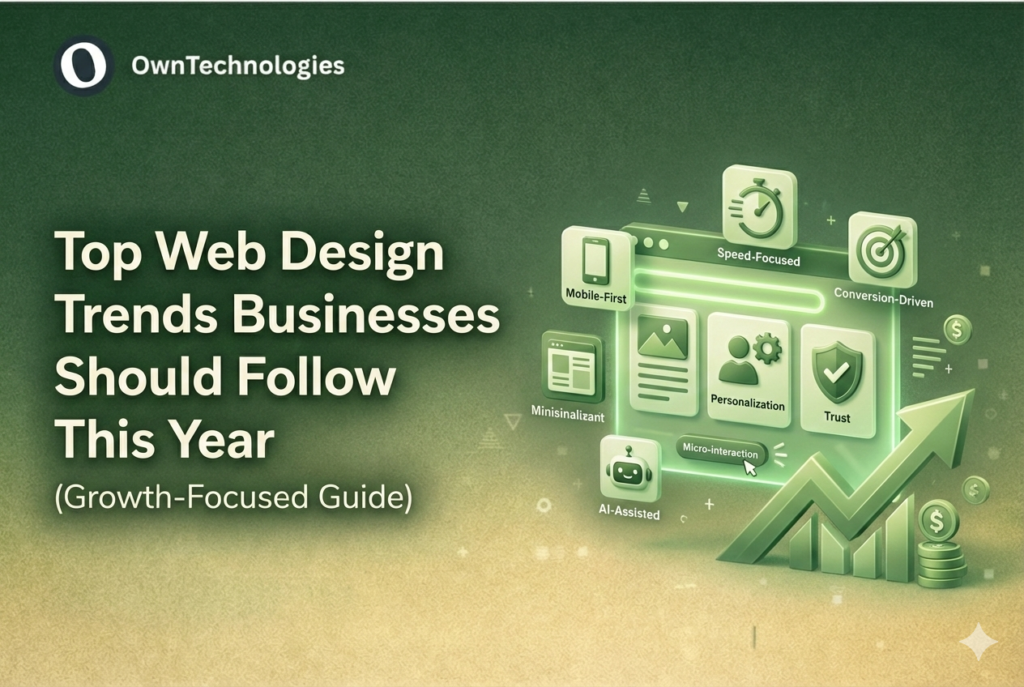
Web design trends are no longer just about aesthetics. This year, design plays a direct role in user trust, conversions, and business performance.
As user expectations evolve and search engines prioritize experience, businesses that fail to adapt risk losing engagement and leads. This guide covers the top web design trends businesses should follow this year—with a focus on usability, performance, and conversion impact.
Why Web Design Trends Matter for Businesses
Modern users decide within seconds whether to stay or leave a website. Design trends today focus on:
- Faster decision-making
- Better usability
- Clear messaging
- Trust and credibility
Following the right trends helps businesses stay relevant, competitive, and conversion-ready.
Top Web Design Trends Businesses Should Follow This Year
1. Mobile-First & Thumb-Friendly Design
With the majority of users browsing on mobile, designs now prioritize one-hand navigation, larger tap areas, and vertical layouts. Mobile-first design improves engagement, reduces friction, and supports SEO.
2. Speed-Focused, Lightweight Design
Websites are becoming cleaner and lighter to load faster. Minimal layouts, optimized images, and reduced scripts improve page speed and directly impact conversions and search rankings.
3. Clear Value Proposition Above the Fold
Modern websites focus on immediate clarity. Businesses are simplifying hero sections to clearly communicate what they do, who it’s for, and why it matters within the first screen.
4. Conversion-Driven UI (Not Just Visual Design)
Design trends now prioritize conversion goals. CTAs, forms, and key actions are placed strategically to guide users naturally toward inquiries, sign-ups, or demos.
5. Minimalist Layouts with Purpose
Minimalism is evolving into intentional simplicity. Clean layouts reduce cognitive load, improve readability, and help users focus on important actions—leading to better engagement.
6. Personalization Through UX
Websites are using behavioral cues, location signals, and dynamic content to personalize user experiences. Personalization improves relevance and keeps users engaged longer.
7. Trust-First Design Elements
Businesses are integrating trust signals directly into design—client logos, testimonials, certifications, and security indicators—placed near key decision points.
8. Micro-Interactions & Subtle Animations
Small animations such as hover effects, loading indicators, and button feedback improve usability without overwhelming users. These interactions make websites feel responsive and modern.
9. Accessibility-Led Design
Inclusive design is no longer optional. Accessible websites are easier to use, perform better in search, and align with global usability standards—benefiting both users and businesses.
10. AI-Assisted User Experience
AI-powered features like chat support, smart search, and guided journeys are becoming standard. These tools help users find answers faster and improve lead capture.
How These Design Trends Impact SEO & Conversions
These web design trends directly support:
- Better user engagement metrics
- Improved mobile usability
- Faster load times
- Higher trust and credibility
- Stronger conversion paths
Search engines increasingly reward websites that deliver great experiences, not just good content.
Common Web Design Trends Businesses Should Avoid
- Design that prioritizes style over usability
- Heavy animations that slow performance
- Generic templates without brand identity
- Hidden or unclear CTAs
- Ignoring mobile and accessibility
Not every trend is worth following—business goals should always lead design decisions.
Is Your Website Aligned With Today’s Design Trends?
Many business websites look fine but underperform because they’re not designed for modern user behavior or conversion goals.
👉 Talk to Our Digital Experts ( +91-9910765616 )
We help businesses design and optimize websites that align with current trends, improve performance, and drive measurable results.
📩 hello@owntechnologies.in
🌐 owntechnologies.in
Frequently Asked Questions
1. What are the most important web design trends for businesses this year?
The most important web design trends for businesses this year include mobile-first design, speed-focused layouts, clear value propositions, conversion-driven UI, accessibility, and trust-focused design elements.
2. Why should businesses follow modern web design trends?
Businesses should follow modern web design trends to meet user expectations, improve engagement, increase conversions, and stay competitive in search rankings and digital visibility.
3. Do web design trends impact SEO rankings?
Yes, web design trends impact SEO by improving mobile usability, page speed, Core Web Vitals, accessibility, and user engagement signals that search engines use to evaluate website quality.
4. How often should businesses update their website design?
Businesses should review their website design annually and consider a redesign every 2–3 years or when performance, branding, or user behavior significantly changes.
5. Which web design trends help increase conversions?
Conversion-focused web design trends include clear CTAs, simplified navigation, fast-loading pages, trust signals, personalized UX, and mobile-optimized layouts.
6. Are web design trends important for small businesses and startups?
Yes, web design trends are important for small businesses and startups because modern, well-designed websites build trust quickly and help compete with larger brands online.
7. Can outdated web design hurt business growth?
Yes, outdated web design can reduce user trust, increase bounce rates, lower conversions, and negatively impact SEO performance, leading to lost business opportunities.